Question
Test whether the space, layer, object, print or technical element is genuinely needed.

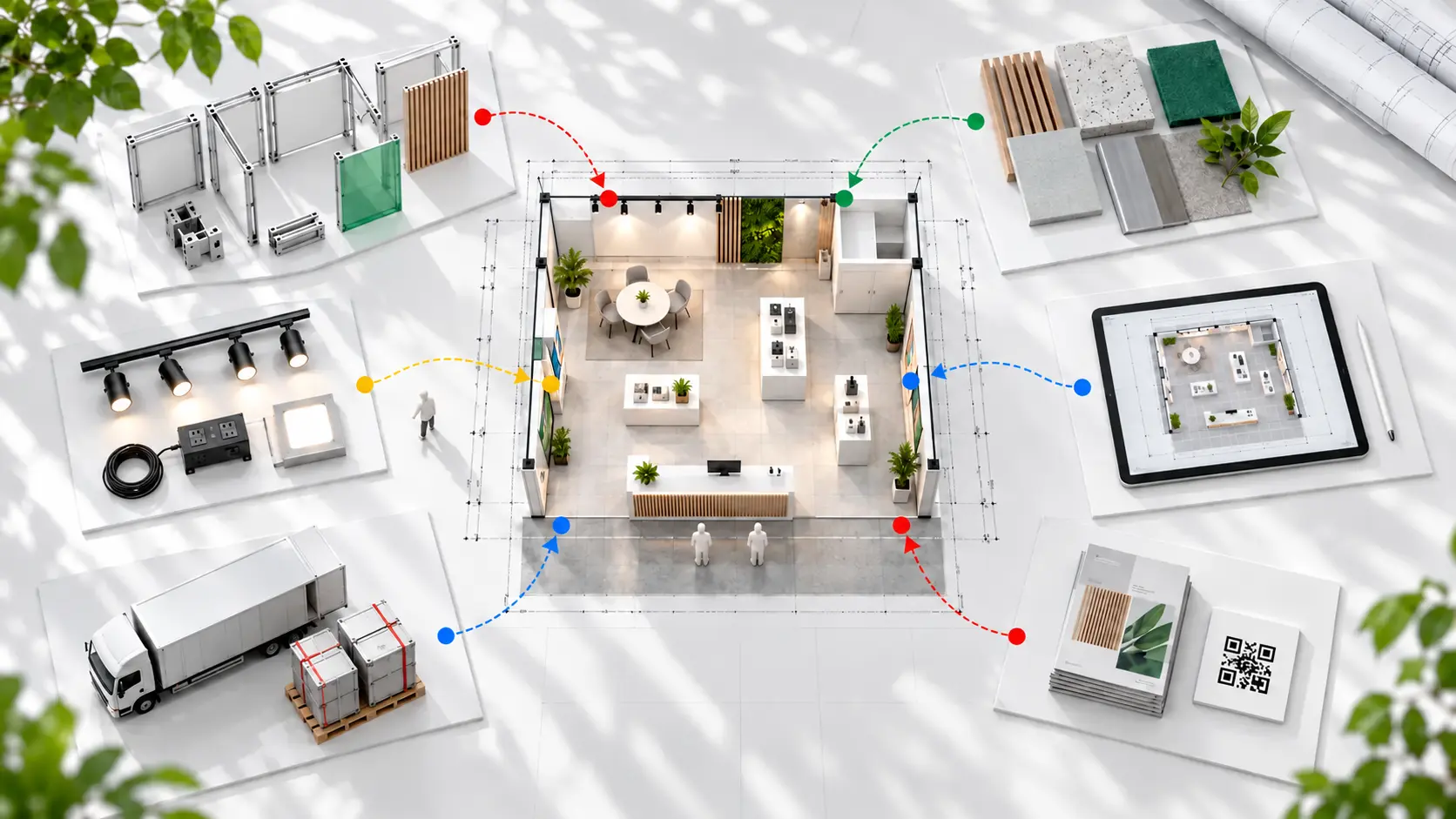
Expooya approaches exhibition sustainability as a practical sequence of decisions—from questioning what is needed to designing for reuse, coordinating delivery and retaining evidence for the next edition.
A practical position
No single material, technology or visual language makes an exhibition sustainable. The result depends on what is built, how much is used, where it comes from, how it is transported and installed, how many useful lives it achieves and what can actually happen to it afterwards.
For that reason, Expooya begins with the purpose and constraints of the assignment. The aim is to identify decisions that can reduce avoidable impact while protecting function, experience, safety, technical performance, budget and delivery reality.
Sustainability should not be achieved by sacrificing the exhibition’s purpose, identity or visual quality. A straightforward medium-scale stand or a more demanding branded environment can both be approached responsibly; the appropriate balance depends on what each assignment must communicate and achieve.
Decision hierarchy
Test whether the space, layer, object, print or technical element is genuinely needed.
Right-size area, quantities, weight, energy demand, finishes, packaging and avoidable complexity.
Use existing or rented assets and design new components for adaptation, repair and repeated assembly.
Plan separation, take-back, recycling or another verified route before materials enter production.
Record what was used and what happened, then turn evidence into better decisions next time.
Design for several lives
Reuse becomes more achievable when it is designed into the structure rather than added as an end-of-event intention. A durable structural core can support different sizes, layouts and identities when branded surfaces and short-life elements remain replaceable.
The reusable logic does not need to dominate the final appearance. Connections, service zones and standard components can be resolved behind precise finishes, allowing elegance, atmosphere and brand expression to remain fully intentional.
Material choices
Material decisions should compare equivalent functions and include quantity, service life, maintenance, installation, transport and end-of-life assumptions. An EPD or certification can improve the evidence base, but it does not make every product carrying it low-impact.
Consider reused or responsibly sourced certified material, verified emissions, durability and connections that preserve panels during dismantling.
Durable aluminium and steel can support many configurations. Recycled content, weight, repairability and achieved reuse cycles remain important.
Reusable tension fabrics and replaceable skins can retain the structural core. Check fibre, ink, fire performance, take-back and recovery.
Paper, cardboard and honeycomb boards can suit light short-life applications when coatings, moisture and treatments do not prevent local recycling.
First ask whether a new finish is required. If it is, favour reusable tiles or recoverable products installed without permanent adhesive where feasible.
Low-VOC and water-based products can reduce emissions; minimal and reversible bonding can keep otherwise useful materials separable.
Bio-based, recycled, recyclable, biodegradable or digital does not automatically mean lower impact. The local collection system, technical treatment, transport and number of successful uses can change the result.
From plan to operation
Dimensions and weight influence transport long before anything moves. Earlier information creates more opportunity to source appropriately, consolidate loads, use reusable packaging, coordinate delivery slots and avoid last-minute journeys. Storage should be considered as part of the reuse model—not assumed to be impact-free.
During the event, useful measures can include efficient LED equipment, sensible operating schedules, daylight and occupancy controls, event- or zone-level energy data where available, and credible renewable electricity options offered by the venue.
Digital support
A component is easier to reuse when people know what it is, where it is, what condition it is in and how it should be assembled. A digital bill of materials and asset register can connect physical elements with practical information throughout their useful life. Digital registration, catalogues, floor plans, tickets, approvals and service documents can also prevent avoidable printing—while necessary print is right-sized and specified for a credible recovery route.
Test layouts, quantities and interfaces before production to reduce clashes and rework.
QR or RFID records can link components to dimensions, condition, location and reuse history.
Compare options using consistent boundaries, functions, quantities and verified source data.
Meters, sensors and connected records can support energy, material, logistics and waste reporting.
Technology is useful when it supports actual reduction and continued reuse. A dashboard, digital twin or product-passport-style record is not an environmental result by itself, and digital delivery does not remove every legitimate need for print.
Circular outcomes
The aim is not to romanticise dismantling. It is to design an operational system in which assets, materials, paper, organics and data have credible next destinations. A material becomes a useful resource only when it is kept separate, sufficiently clean and connected to a real reuse, take-back or treatment route agreed before build-up.
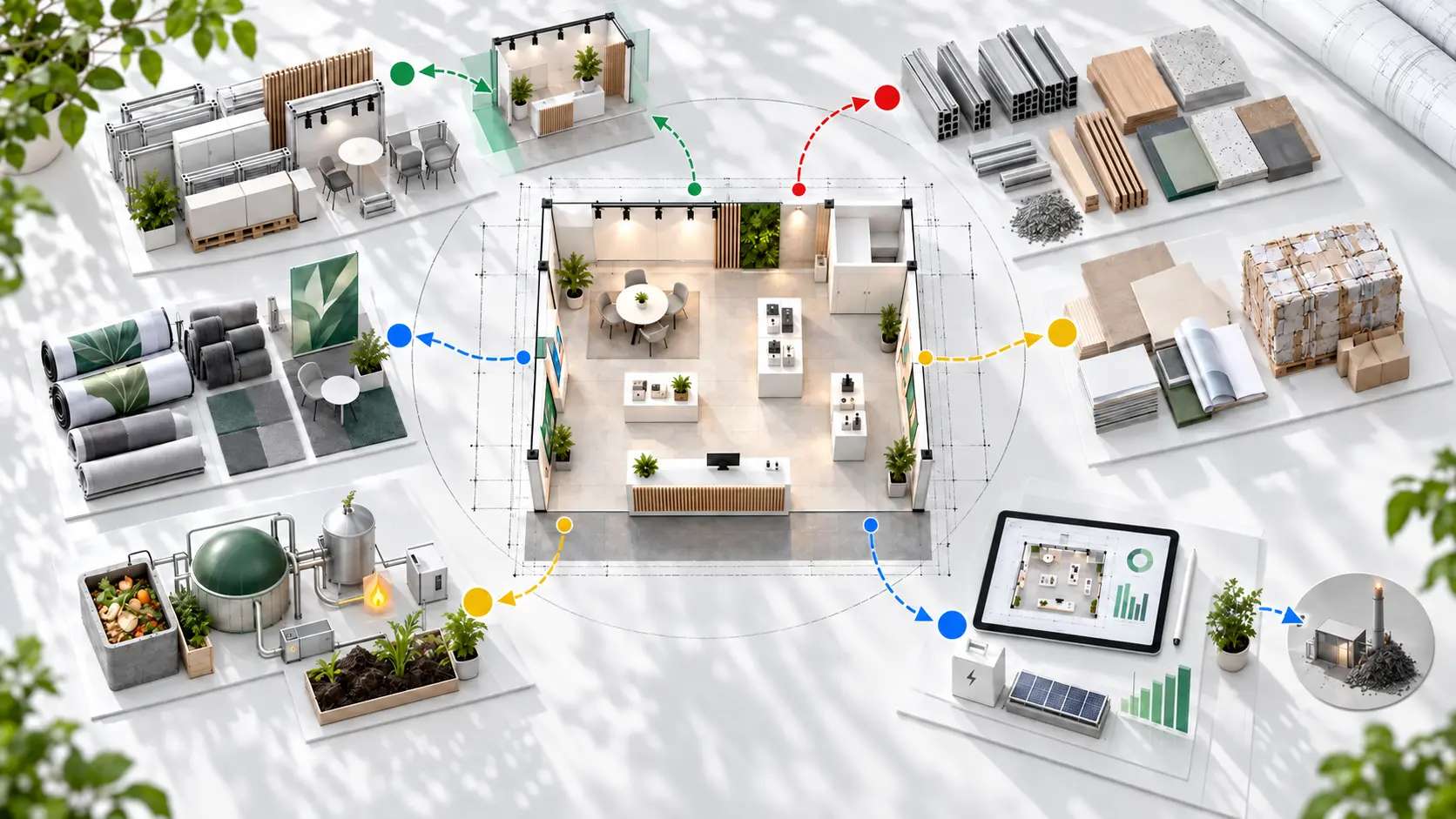
Inspect, repair, record and return frames, counters, furniture, lighting and undamaged panels for storage, rental or the next configuration.
Reuse intact elements first. Keep clean timber and accepted boards separate; coatings, laminates, adhesives and contamination can limit material-recycling routes.
Separate aluminium and steel from mixed assemblies so established metal-recycling routes can return them to secondary production.
Prioritise re-use, rebranding and supplier take-back. Fibre- or product-specific recycling depends on composition, condition and local acceptance.
Prevent surplus through digital catalogues, QR access, print-on-demand and accurate quantities. Keep remaining brochures, posters and cartons dry, clean and free from incompatible laminates.
Prevent food surplus and donate safe edible items where possible. Separately collected organics may go to composting or anaerobic digestion; only suitable non-recyclable residuals should move to compliant energy recovery.
Define named waste streams in exhibitor and contractor guidance; provide clear front- and back-of-house collection; train support teams; check contamination; arrange take-back, donation and specialist treatment partners; record weights and destinations; and use the results to improve procurement and design rules for the next edition.
Energy recovery is not recycling. It sits below prevention, reuse and recycling in the EU waste hierarchy. A venue may route suitable residual waste—or separately collected organics—to authorised infrastructure that produces heat, electricity or biogas; this should not be presented as a reason to mix recoverable materials or create avoidable waste.
Evidence and improvement
A useful baseline defines the event, boundary and data available. Depending on the assignment, relevant records can include material quantities, reused assets, new purchases, transport distance and mode, energy, waste streams and their destination, and the outcome of planned recovery routes.
Reporting should distinguish measured results, estimates and missing information. Specific statements are more credible than broad labels: what was reduced, reused or recovered; compared with what; within which boundary; and based on which evidence.
People and responsibility
Environmental performance should be considered alongside accessibility, inclusion, health and safety, reasonable working conditions, responsible procurement and clear ownership across the supply chain.
Expooya can support the relevant strategy, design intent, information, documentation, coordination, digital records and improvement planning included in an agreed assignment. Physical construction, regulated engineering, statutory approvals, venue compliance and specialist responsibilities remain with appointed contractors, qualified specialists, venues, organisers and competent authorities.
Research basis
These sources inform the page; they do not constitute a claim of certification, conformity or a universal material ranking.