Understand
Clarify objectives, users, context, requirements, existing systems and constraints.

We start with your objectives, stakeholders, budget and practical constraints, then define the scope, responsibilities and steps needed for the exhibition assignment.
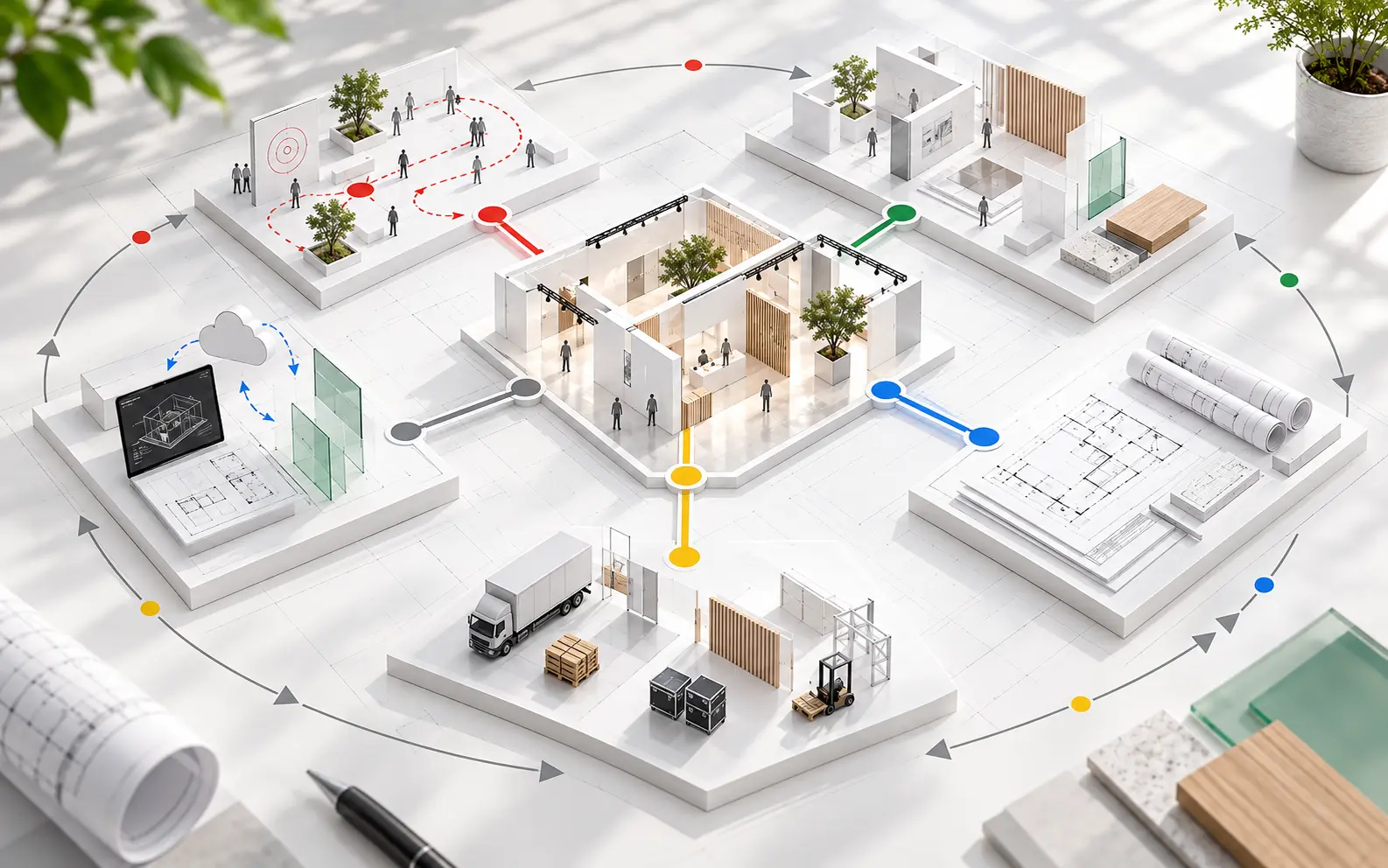
How we begin
Every assignment begins by understanding what needs to be achieved, who is involved and what conditions shape the work. The starting point is not a predetermined product, format or technical response.
Expooya considers objectives, audiences, responsibilities, available information, existing systems, practical constraints, budget, timing and the wider exhibition context before defining an appropriate way forward.
Our working method
Clarify objectives, users, context, requirements, existing systems and constraints.
Shape the strategy, structure, scope, responsibilities, services and workflows.
Develop the required spatial, visual, operational, technical or digital response.
Connect documentation, organisers, specialists, contractors, suppliers and delivery interfaces.
Prepare the people, information, service points and escalation paths included in the live-event scope.
Organise feedback and data, reduce friction, automate suitable processes and reuse useful knowledge.

A multidisciplinary view
An exhibition decision rarely affects only one area. A spatial choice can influence visitor flow, technical delivery, service operations, budget and the information required by different parties. A digital workflow can affect registration, floor planning, badges, support and reporting.
Expooya’s connected approach helps identify these relationships early and keeps the relevant decisions, information and responsibilities aligned as the assignment develops.
Flexible collaboration
Not every project requires all six stages or every Expooya capability. The collaboration model is defined around the actual objective, current project position, available team, existing suppliers and the responsibilities that the client or organiser wishes Expooya to support.
This may mean concentrating on one defined challenge or connecting several related areas across relevant stages of the exhibition lifecycle. The scope, outputs, interfaces and decision points should remain clear in either case.
Defined responsibilities
Expooya supports the strategy, design, information, coordination, operations or digital work included in the agreed assignment. Physical construction and other regulated or specialist responsibilities may be carried out by appointed contractors, venues, engineers, authorities or qualified service providers.
Clear ownership protects the quality of the work. It allows each party to understand what it must decide, provide, review or deliver, while Expooya helps the agreed interfaces remain connected.